Monday, June 24, 2013

Teacher's Guide

1. 9th Grade Theatre I

Note: In this study guide, there is talks about Autism and Evolution, due to their huge nature in the show itself. Because of the sensitivity of these topics, there may be students who are not comfortable speaking about the topics. Please be aware. 

2. Pre-show Activity: Cave Paintings SOL #3 C

In Lucy, Lucy paints on her mothers walls with paint. Her paintings are said to resemble cave paintings. In this activity you will paint a cave painting with a personal twist.
A. Materials: Paper and Paints
B. Instructions: No paint brushes allowed! You must use your hands/fingers to make your cave painting. Paint what comes to your mind, make sure it looks like a cave painting!
C. Cave Painting examples:

3. Pre-Show Viewing and Discussion: Facial Recognition Charts SOL #5 A

In Lucy, Dr. Morris uses facial recognition charts in an attempt to encourage Lucy to learn how to communicate her emotions. View the example below, and then discuss how this method would help someone with a disability clearly communicate how they are feeling.
Discussion Questions:
A) Do you think that this chart could be considered an effective means of communicating basic emotions? Why or why not?
B) Do you think that any of the faces are misleading? For example: Does the "Anxious" face look like anxiety to you? If not, how could it be redrawn to portray anxiety more efficiently?
C) Beside this kind of chart, what other kind of communication method could be used to help portray thoughts and feelings?

4. Pre-Show Reading and Discussion SOL #5 A


Autism spectrum disorders (ASD) are characterized by social-interaction difficulties, communication challenges and a tendency to engage in repetitive behaviors. However, symptoms and their severity vary widely across these three core areas. Taken together, they may result in relatively mild challenges for someone on the high functioning end of the autism spectrum. For others, symptoms may be more severe, as when repetitive behaviors and lack of spoken language interfere with everyday life.
As illustrated by the graph on the left, the basic symptoms of autism are often accompanied other medical conditions and challenges. These, too, can vary widely in severity.
While autism is usually a life-long condition, all children and adults benefit from interventions, or therapies, that can reduce symptoms and increase skills and abilities. Although it is best to begin intervention as soon as possible, the benefits of therapy can continue throughout life. Link


Discussion: Autism is a disorder that affects a large number of people, but can manifest itself in so many different ways.
A) Do you know any other ways that Autism can present itself? If so, name some.
B) Do you know anyone who has been diagnosed as "on the spectrum"?
C) If you were a Therapist, what methods would you use to help people with this disorder?

5. Post Show Follow Up Discussion 

In the show, you saw that Vivian came to believe that Lucy was the next step in human evolution.
A) How do you think Vivian came to believe this?
B) Do you think that there is any sense in Vivian's beliefs?
C) If you were Vivian's assistant, how would you have reacted to her claims?

Thursday, June 20, 2013

Review Capsules


Lucy (Atkins Playwright)


"Lucy is Really, Really, Really Good" by Johnnie Walker Torontoist March 19th, 2007 Link

(My Summary) A short yet all encompassing review. Walker does a great job of touching on the script, the production, and the set design.

(Performance Quote) "Meg Roe does terrific work as Lucy, who has moments of lucidity in asides to the audience where she can express everything she would otherwise have difficulty communicating. Seana McKenna is typically phenomenal, playing a character whose coldness and lack of compassion at certain times could make her a completely unlikeable personality, but whom she renders completely believable and even sympathetic." 

(Design Quote) Also of note is the fantastic set design by Teresa Przybylski, which is utilised fluidly and beautifully.

"An Anthropologist Evolves with Help From Her Autistic Child" Jason Zinoman New York Times November 2nd, 2007 Link

(My Summary) A New York Times article in which Zinoman focus' on the script and it's flaws more than the actual performance of the show. A good read nonetheless to see what he though was "bad".

(Performance Quote) "Since the supporting characters are at best one-dimensional and at worst transparent plot devices, Ms. Emery must carry the play. And without betraying the cool aloofness of her character, she provides an emotional center the drama desperately needs."

(Design Quote) None.

"Gut Wrenching and Compelling Story Telling" Ellen Wilson Dilks Stage Magazine January 25th 2011 Link

(My Summary) Wilson does a great job in her review. She talkjs about the script, the set, the performance, the direction and even the playwright himself. 

(Performance Quote) "Andrea Green tackles the difficult role of Lucy. In addition to portraying autism accurately, she also serves as the narrator of the piece, taking the audience inside Lucy’s head. Ms. Green is wonderful at these challenging transitions in and out of Lucy’s autistic behaviors. She instantly endears herself to the audience during her speeches directly to us. Then smoothly morphs into a scene with the skill of a seasoned actor. Kate Eastwood Norris is compelling as Vivian, deftly navigating the character’s difficult arc. Initially, Vivian is a bit off-putting, but Ms. Norris endows her with a humor and vulnerability that wins the viewer over. She is not afraid of the darker aspects of Vivian’s character."

(Design Quote) Strong and evocative design work adds much to the production. Alexis Distler’s set shows the frame of a typical suburban home, with Lucy’s therapist’s office sharing the space. It is a fascinating study of angles and connections—a perfect metaphor for the play’s story. Rosemarie McKelvey’s costuming complements each character and helps add to the feel of the story. The lighting design by Joshua Schulman includes an amazing gobo effect that creates Lucy’s African-like drawings on the walls of the stage and the theatre. Add to this Fabian Obisbo’s beautifully lyrical sound design and the viewer is totally drawn into the world of the play.

"Lucy" Victor Gluck Theatrescene.net November 5th 2007 Link

(My Summary) Gluck does a good job of covering all aspects. Even though it is a short article, he articulates the plot, the performance, and even some design work.

(Performance Quote) "...has obtained brilliant performances from Emery as Vivian and Lucy DeVito in the title role. So convincing is DeVito as a thirteen year old autistic child that it is difficult to believe that she, herself, is not autistic. Emery, who is almost never off stage. holds the play together with her character’s own journey from her lack of self-knowledge to a new understanding of herself and all those around her. She also runs the gamut from self-possessed career woman to one on the verge of a nervous breakdown."

(Design Quote) "Ryan Elliot Kravetz has designed a setting with diaphanous walls that suggests the off-kilter, other worldly existence of those with autism. The set changes from Vivian’s archeological dig to her city apartment to the therapist’s office are swiftly and economically accomplished. Chris Dallos has lit the walls of the play in changing colors which parallel the many moods of the drama. Suzanne Chesney’s costumes help define the various personalities that inhabit this story."

"Autistic Lucy Fails to Reach Us" John Colbourn Sun Media  March 22nd 2007 Link

(My Summary) John Colbourn makes many a good point about Lucy in his article. Though right off the back he lets you know he is biased when it comes to science in theatre. He focus' mainly on the script with a small touch on the performance. 

(Performance Quote) "What Lucy does offer, however, is two fine roles for two exceptionally talented actors. Under the direction of Eda Holmes, Roe and McKenna make the most of them.... Moving effortlessly from Lucy's exterior world to her interior, Roe is never anything less than completely and compellingly believable, while McKenna tackles her role with such a ferocious conviction we actually end up feeling a grudging sympathy for this essentially unsympathetic character."

(Design Quote) None.

Miss Chatelain (Atkins Playwright)


"One Man Marathon Steers Clear of Tired Old Gay Routes" Joanne Huffa January 14th, 1999 Link

(My Summary) Huffa does a great job of talking about Atkins one man show in an objective manner. She talks about the strengths and weakness' not only of the script, but of the performance as well.

(Performance Quote) "Atkins' physicality as an actor ensures that the energy of Miss Chatelaine never flags."

(Design Quote) (No quote, but she does touch on his costumes and how well implemented they were.)


Good Mother (Atkins Playwright)


"Another Mother...Good Mother a Powerful Story of Personal Rediscovery" John Colbourn Sun Media 2001 Link

(My Summary) Mr. Colbourn writes a much more positive review this time. He talks about the script and how it is strong as points and weak at others. He talks about the great acting and directing, but no mention of scenic elements. 

(Performance Quote) "The always luminescent McKenna and Best are both superb in roles that demand nothing less than complete emotional integrity. Graff and Dodd are impressive also. Jane Spidell, Shawn Mathieson, Lisa Horner and Kim Horsman round out the cast in strong supporting performances."

(Design Quote) None. 

"Good Mother" Christopher Hoile Stage Door Guest Review 2001 Link

(My Summary) This is our second time to hear from Mr. Hoile. He focuses more on the flaws, but still uplifts the scripts where we believes it is deserving. He also touches on the performance and the set as well. 

(Performance Quote) "Wayne Best as Anne's husband Ben gives one of his best-ever performances, fully communicating the conflicting emotions of his character. Anne's sister Louise is the only character Atkins grants much subtext, but Jane Spidell beautifully brings out her unspoken conflict of what is right and what she desires. Michele Graff as Nancy has to cope with a character who repeatedly flies off into pretty much the same fit of anger. All delivered at a shout these fits become tiring. In her quieter moments, however, Graff is able to bring out a fuller sense of her character. Andrew Dodd, aged 11, plays Nancy's brother, Boo, with more assurance and naturalism than most of the adult actors in training at Stratford."

(Design Quote) "Peter Hartwell's design is very simple making use of slides (by Michael Besworth and Daryl Cloran) projected on two angled screens to locate each scene. Wendy Greenwood's lighting is crucial in establishing the varying moods of the piece, as is Peter McBoyle's detailed soundscape, particularly enjoyable in the movie theatre scene."


The Glass Menagerie (Atkins Actor)


"Atkins acting plan" Glenn Sumi NOW Magazine January 6th 2005 Link

(My Summary)A good article full of information. Lots of quotes from the actors.

(Performance Quote) "Whether you can relate to the literal nuts and bolts of their lives – the fact that there’s no hot water, or that Tom has only two shirts – doesn’t matter. Their emotional life is still completely recognizable. The family dynamic feels contemporary"

(Design Quote) "...which has specific technical requirements involving slides, musical cues and lighting."

"A Menagerie to Forget" Christopher Hoile Stage Door January 6th 2005 Link

(My Summary) A great review with lots of detailed information. Hoile does a good job of talking about everything. He was not a fan of the production.

(Performance Quote) "Abrahams has directed Damien Atkins as Tom to be not someone who is a neutral stage manager and set dresser, which he does all too slowly, but as someone destroyed by the memory of what he has done to his family..."

(Design Quote)"Thus, we have an atmosphere of spaciousness not claustrophobia.  The Wingfield residence is so big that the physical and psychological need to escape whether to the movies as Tom does or into a private world as Laura does is undermined."

Wednesday, June 19, 2013

Production Reviews

Lucy (Atkins Playwright)

"Lucy is Really, Really, Really Good" by Johnnie Walker Torontoist March 19th, 2007 Link

"An Anthropologist Evolves with Help From Her Autistic Child" Jason Zinoman New York Times November 2nd, 2007 Link

"Gut Wrenching and Compelling Story Telling" Ellen Wilson Dilks Stage Magazine January 25th 2011 Link

"Lucy" Victor Gluck Theatrescene.net November 5th 2007 Link

"Autistic Lucy Fails to Reach Us" John Colbourn Sun Media  March 22nd 2007 Link

Miss Chatelain (Atkins Playwright)

"One Man Marathon Steers Clear of Tired Old Gay Routes" Joanne Huffa January 14th, 1999 Link

Good Mother (Atkins Playwright)

"Another Mother...Good Mother a Powerful Story of Personal Rediscovery" John Colbourn Sun Media 2001 Link

"Good Mother" Christopher Hoile Stage Door Guest Review 2001 Link

The Glass Menagerie (Atkins Actor)

"Atkins acting plan" Glenn Sumi NOW Magazine January 6th 2005 Link

"A Menagerie to Forget" Christopher Hoile Stage Door January 6th 2005 Link

Tuesday, June 18, 2013

Production History

Delaware Theatre Company
Wilmington Delaware
January 19th - February 6th 2011
Director: David Stradley
Set Design: Alex Distler
Costume Design: Rosemarie McKelvey 
Lucy: Andrea Green
Vivian: Kate Eastwood Norris
------------------------------------------------------------
Ensemble Studio Theatre                            
New York, New York                            
October 24th through November 18th 2007
Director: William Carden                                
Set Design: Ryan Kravetz                          
Lucy: Lucy DeVito                                    
Vivian: Lisa Emery
-------------------------------------------------------------
CanStage Theatre                                                                                
Ontario Canada                                          
March 8th through April 14th                    
Director: Eda Holmes                                      
Set Designer: Teresa Przybylski                  
Lucy: Meg Roe                                          
Vivan: Siena McKenna
-----------------------------------------------------------

Monday, June 17, 2013

Production Stills


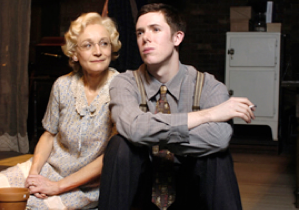
Meg Roe as Lucy and Seana McKenna as Vivian at Canstage Canada 2007.

Another shot from Canstage

Lucy DeVito as Lucy and Lisa Emery in Lucy at Ensemble Studio Theatre in New York 2008.


The Ensemble Theatre's production of Lucy.
Lucy and Vivian meet with Dr. Morris. (from right) Andrea Green, Ross Beschler, and Kate Eastwood Norris. Delaware Theatre Company 2011.


Another shot of Lucy in Delaware.


Damien Atkins in The Glass Menagerie 
Damien Atkins in Miss Chatelaine
Damien Atkins in Good Mother

Friday, June 14, 2013

Hard Copy Resources

Source 1)
Thinking in Pictures by Temple Grandin 2005
RC553.A88 G74 1995
This is an autobiography of Temple Grandin's life. She talks about her childhood with autism and how she grew up and how she got to where she is today.
This will be a valuable resource to the team because it is a great read to understand how autistic people think. It is like an inside scoop into autism.

Source 2)
Human Evolution An Illustrated Guide by Peter Andrews and Chris Stringer 1989
GN 281 .A55 1989
This is a great illustrated guide on the evolutionary standpoint of how humans evolved to where we are today.
This will help us understand Vivian's line of work and how she becomes to believe what she believes.

Source 3)
Lucy's Legacy by Donald C. 2009
GN 283.25 .J64 2009
This is a book all about the fossils known as Lucy. There are some great pictures in here to show us.
This will be a great help to the teem due to the visual imagery that will help understand Vivian.

Source 4)
Cutting-Edge Therapies for Autism by Ken Siri and Tony Lyons 2010
RJ 506 .A9 S57 2010
This book is full of different therapy techniques used on people with autism.
I think this would be great to check out so we could understand what Morris is doing and why he is doing it.

Source 5)
Vouge January-April 2010 Magazine
TT500 .V7
This is a collection of Vouge Magazine's in 2010.
This resource is key to understanding the fashion and culture prevalent in 2010.

Wednesday, June 12, 2013

Sounds and Images

Autism Video

This is a good video talking about autism. The people involved are very knowledgeable about the subject.

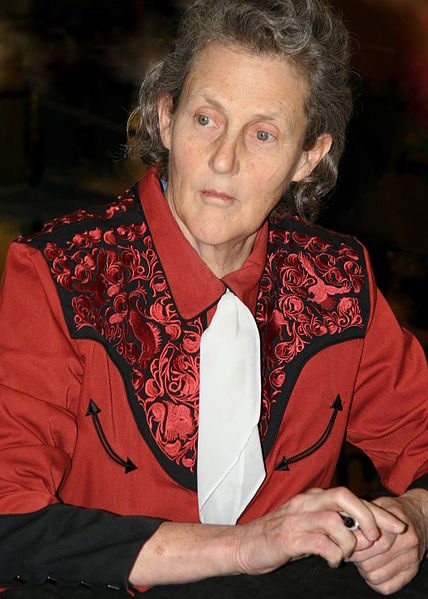
Temple Grandin 
Temple Grandin is a wonderful example of someone who conquered her disability. She is a professor at  Colorado State University. She has many different inventions in the agriculture world. 

Temple Grandin Speaking
This is a great video of Temple Grandin. She speaks a lot about her autism and how she has conquered it. 

Australopithecus afarensis 
This is a great video in the historical side of the fossils known as Lucy. Great thing to check out to understand what Vivian does and how she might think certain ways.

Suspension Bridge
In the play, Lucy's favorite book is about suspension bridges. Children with autism are usually very visually stimulated. With photos like these, it would be hard for Lucy NOT to be visually stimulated!

Cave paintings
Lucy sees pictures of cave paintings in one of Vivian's books. Near the end of the play Lucy has decided that Vivian's walls need some cave paintings as well.

Wall Painting
Lucy paints on Vivian's walls in act II. What did she paint? It is described as very colorful. This image popped out to me as something similar as to what Lucy would paint.


Facial Recognition Chart
Dr. Morris uses one of these with Lucy to begin to help her learn how to communicate with other people about how she is feeling at certain moments in time. 

Vivian's Home
Vivian's home is described as very sparsely decorated and very bare. I feel like this photo gives a good representation.

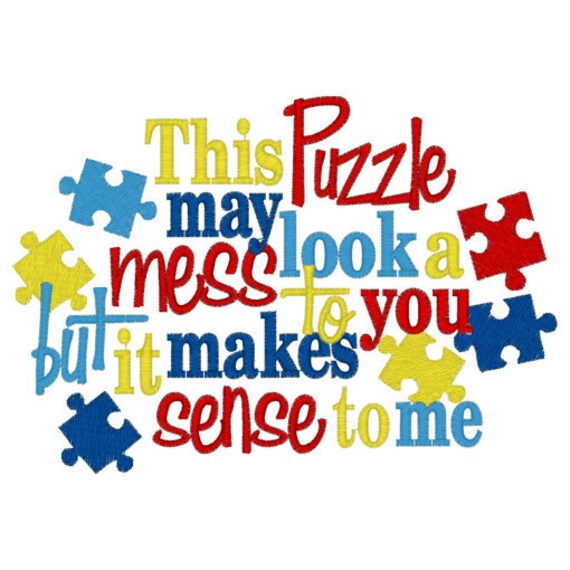
Autism Puzzle Piece
Those words are a great way to sum up how Lucy thinks. With Lucy's monologues, we see that things really do make sense to her, even if she can't make sense to other people. 

Tuesday, June 11, 2013

Where and When

New York City, New York, 2010

Relevant Information to New York:
1. New York is home to upwards of 20 schools designed around children with autism. This makes it a great place for Lucy to live with Vivian.  Source
2. New York is the most populous city in the United States. Vivian lives here because of her work, but she is rarely home due to how much she dislikes other people. Source
3. There are many colleges in NY offering degrees in Anthropology. Perhaps this is where Vivian got her degree? Or maybe some of her funding comes from one of these schools? Source
4. New York City holds a national Autism conference. Gavin has mnay reasons to have wanted Lucy to come here. Source
5. A task force charged with autism research in New York's school systems finishes its research in 2009. By 2010, the data is finalized and submitted to the mayor so that he may be advised as to what improvements to make in the school system. More good things about New York and its autism awareness. Source


Relevant Information to 2010:
1. The population of New York in 2010 was 19,378,102. All the more reason for Vivian to hate her home. Source
2. Top Stories in the United States in 2010: The BP Oil Spill, Rise of the Tea Party, Obama's Healthcare, Obama's Economy, "Islamaphobia". Source
3. July 2010 was one of New York's hottest months on record! Source
4. Possible autism breakthrough discovered in 2010. Scientists believe they have found a drug capable of helping with the spectrum disorder. Source
5. New York author Ken Siri releases his new book "Cutting-Edge Therapies for Austism Source

Ernest Challenge


London 1895

1. What is a morning room?
A room used for luncheons and daytime callers. "In the latter 19th century, the room became a space in which the ladies, Mrs. Harris in particular, would spend the duration of the morning doing their “work.” The work that was enacted included handcrafts such as embroidery and sewing, letter and journal writing, as well as giving daily direction to the servants. Because the “work” of the day was to take place in the morning, it was socially understood that visits to or from friends ought to be short: hence the array of uncomfortable small chairs which can be found in the room. The morning room in Eldon House faces west, which in some Victorian homes was deliberate; there was an assumption in that period that morning sunlight was harmful to the skin, and so the “morning” room’s location tended not to face east." Source 

2. What furnishings would be considered luxurious and artistic? 
"Heavy mahogany and rosewood furniture symbolized prosperity, while elaborate tapestry cushions made their debut on dining room chairs and armchairs, providing comfort and luxury. Marble fireplaces were the focal point, and guests dined beneath crystal chandeliers in dining rooms, which were often decorated with patterned wallpaper featuring greens, browns or pastel colors. Birds in gilded cages and dado rails were fashionable accessories." Source


3. What items would be needed for afternoon tea? 
"The tea ritual used the finest bone china, silver teaspoons and linens... It was called "low tea" because it was usually taken in a sitting room or drawing room where low tables (like a coffee table) were placed near sofas or chairs." Source 
"A teapot of silver or bone china is, of course, de rigueur. You'll need a kettle to boil the water before you transfer it to the teapot. Also, before pouring the boiling water into the pot you intend to serve from, be sure to warm it. You can do this by filling the table pot with hot water from the tap while the other pot is put on the stove to boil. You will also need a sugar bowl and cream jug (pitcher). Use small silver tongs for sugar cubes, and a silver sugar spoon for granulated or raw sugar crystals...your best china cups, saucers and dessert plates and silver forks, spoons and butter knives...silver platter..." Source
"...tea caddy, teapot, hot water urn, and heater, and teacups...tea strainer, china cups..." Source


4. How would they be arranged? 
The tea tray and china tea set are placed at one end of the table.
On the right, set out the necessary number of cups and saucers and teaspoons to accommodate your guests. Plates, flatware, and tea napkins are placed on the left. Platters of refreshments can include tea sandwiches in fancy shapes, various kinds of nut breads, cakes, pastries, and cookies. Source


5. What music might Algernon be playing on the Piano?
Henry Litolff Source 
Liszt Source

Monday, June 10, 2013

Historical Questions

1) In the script, Lucy is enrolled in a special school for autism. I need to research autism treatment methods in 2010.
The following link will take you to a page with an overview of treatment options. More detailed options are in the box on the left of the page. Treatment Methods

2) Vivian studied the fossils known nicknamed "Lucy". I need to research study methods Anthropologists use to analyze what they find. How would Vivian have studied these fossils?
The following link will take you to a list of different kind of Anthropology. Vivian is a Biological Anthropologist, which is the top explanation on the page. Biological Anthropology

3) Africa seems to be a great source of Anthropologic discovery. I need to research Africa's history related to Anthropology.
The homepage of the following website has a wonderful paragraph that really explains why Africa is so important to the study of Anthropology. Africa

4) Vivian mentions a few cofactors that possibly can relate to autism. I need to research these things and see how/why they are suspect.
The link below contains a very long list of possible Autism causes, when they were suspect, and if they are still believed to be a cause or not. Causes of Autism

5) Vivian talks about evolutionary leaps. I want to research the history behind what she is speaking of.
The following link is a description of an evolutionary leap between two Homo genus'. Habilis to Erectus

Thursday, June 6, 2013

Additional Resources

1. Autism Basics
Autism
This website is a general guide to autism. What it is, what causes it, how it presents itself, etc. 
The website above is a wonderful research tool to use to understand Lucy's condition. There are many different ways that autism presents itself and it is important to understand it. This will help the director and actress make appropriate choices.

2. Anthropology
What is Anthropology?
This website explains what exactly anthropology is, how scientists use it, and it's benefits in the scientific world.
This website is a wonderful thing for the director and Vivian to use to understand what exactly Vivian does. This will be a great resource for everyone to help better their understanding.

3. Damien
Interview
The video above is an interview with Damien Atkins. He goes into his thoughts and feeling about writing Lucy.
This video is great because he really gives some good insight into what he was thinking and why he made certain choices.

4. Lucy...the fossil
Australopithecus afarensis
The above website contains a brief yet comprehensive explanation behind the fossils that Lucy is named after in the show.
With so many references to these, I thought it important to understand what exactly they are referring to.

5. Darwin
Survival of the Fittest
The website above is a great simple way to explain Darwin's theory of survival of the fittest.
With a huge theme of the play being based on this theory, I thought it to be important that everyone has the same definition and understanding of this theory.

Wednesday, June 5, 2013

Exegesis

1. Lucy (1) Hello, Homo Sapiens
the species of bipedal primates to which modern humans belong, characterized by a brain   capacity averaging 1400 cc (85 cubic in.) and by dependence upon language and the creation and utilization of complex tools. Pronunciation

2. Julia (9) ...it's the Dawkins
Clinton Richard Dawkins is an English ethologist, evolutionary biologist and author. [...]Dawkins came to prominence with his 1976 book The Selfish Gene, which popularized the gene-centred view of evolution and introduced the term meme. In 1982, he introduced into evolutionary biology the influential concept that the phenotypic effects of a gene are not necessarily limited to an organism's body, but can stretch far into the environment, including the bodies of other organisms; this concept is presented in his book The Extended Phenotype.

3. Gavin (14) Um, she's fine, she's autistic.
Autism spectrum disorder (ASD) and autism are both general terms for a group of complex disorders of brain development. These disorders are characterized, in varying degrees, by difficulties in social interaction, verbal and nonverbal communication and repetitive behaviors. Source and more autism information

4. Julia (15) The Hadar find.
Hadar (also spelled Adda Da'ar; Afar "treaty [ahdi] stream [d'ar]")[1] is a village in Ethiopia, on the southern edge of the Afar Triangle. The village is known for the nearby archaeological site. Pronunciation More info

5. Lucy (24) Why didn't you finish your ants on a log...
A snack made by spreading peanut butter on a celery stick and putting raisins on top.

6. Vivian (28) Tactile Defensive.
Tactile defensiveness (TD) is characterized by behaviors such as rubbing, scratching, negative expressions, withdrawal, or avoidance in response to tactile stimulation. Source

7. Morris (29) It's called sensory integration dysfunction.
Sensory integration disorder or dysfunction (SID) is a neurological disorder that results from the brain's inability to integrate certain information received from the body's five basic sensory systems. These sensory systems are responsible for detecting sights, sounds, smell, tastes, temperatures, pain, and the position and movements of the body. The brain then forms a combined picture of this information in order for the body to make sense of its surroundings and react to them appropriately. Source

8. Morris (32) I suppose you read about the Dikika baby.
The Dikika baby refers to the fossilized remains of an infant from 3.3 million years ago. Discovered in present day Ethiopia.
A picture of the skull of the remains. 

9. Morris (32) It's quite a find! Afarensis, isn't it?
Australopithecus afarensis is an extinct hominid that lived between 3.9 and 2.9 million years ago. A. afarensis was slenderly built, like the younger Australopithecus africanus. It is thought that A. afarensis was more closely related to the genus Homo (which includes the modern human species Homo sapiens), whether as a direct ancestor or a close relative of an unknown ancestor, than any other known primate from the same time. Source and more
A cast of the remains of "Lucy", who is an Afarensis, and also the basis of this play!

10. Vivian (56) they were still using thimerosal...
Thiomersal, commonly known in the US as thimerosal, is an organomercury compound. This compound is a well established antisepticand antifungal agent.The pharmaceutical corporation Eli Lilly and Company gave thiomersal the trade name Merthiolate. It has been used as a preservative in vaccines, immunoglobulin preparations, skin test antigens, antivenins, ophthalmic and nasal products, and tattoo inks. Its use as a vaccine preservative is controversial, and it is being phased out from routine childhood vaccines in the United States, the European Union, and a few other countries. Thimerosal

11. Vivian (61) We know this because the distal femur is angled...
The distal femur is where the bone about the knee joint flares out like an upside-down funnel. Source


Tuesday, June 4, 2013

Play Analysis

 Lucy by Damien Atkins is a Realist Drama in two acts.


Playwright

Damien Atkins      
                                               
  Damien Atkins was born in Australia, but now makes his home in Toronto.He has been seen on stages in Toronto and across Canada and the U.S. (including the renowned Shaw and Stratford Festivals), as well as on television and in movie theatres. Damien got his start as an actor at the age of five with the St. Albert Children's Theatre, a unique and widely respected theatre company in Alberta that produces theatre by children, for adults. He also attended the theatre arts program at Grant MacEwan College in Edmonton. He has training and experience in classical, modern, and musical theatre. Since his graduation he has appeared in plays by Shakespeare, Wilde, and Pinter, as well as many modern classics by writers like Timothy Findley, Brad Fraser, and Mark Ravenhill. On television Damien has appeared on NBC ("The Matthew Shepard Story"), CBC ("This is Wonderland"), BBC, CTV, Showtime ("Our Fathers"), TMN and the Sundance Channel (as a regular in season 3 of the acclaimed Canadian series "Slings and Arrows"). As a playwright, he has also been produced across the country and on CBC Radio. He was the youngest playwright ever produced by the Stratford Festival. He is the recipient of two Dora Mavor Moore Awards, Toronto's awards for theatre excellence. Bio Link 

Plot Summary 

The titular character is a 13-year-old girl being raised by her devoted father, Gavin, somewhere in the western part of the U.S. He has gotten Lucy accepted to a prestigious special school in the East, near her mother’s home. He asks his ex-wife to take Lucy for a year so the girl can get the advanced treatment she needs. Lucy’s mother, Vivian, is a brilliant anthropologist who is totally absorbed in herself and her work; she has no maternal instincts and left her daughter when she was quite young to spend years on a dig in Africa.
Forced into caring for Lucy, Vivian is at a total loss as to what to do; her research assistant, Julia, is able to connect with Lucy instantly, much to Vivian’s surprise. Caring for her daughter brings many of Vivian’s own insecurities and fears to the surface and she starts to crumble. Ever the scientist, Vivian distrusts what Lucy’s therapist is recommending and rather than stick to the highly structured day that her ex-husband mapped out—and the therapist wholly endorses—she starts encouraging Lucy’s “acting out.” Link

Characters:

Lucy - a thirteen year old girl diagnosed with Autism
Vivian - Lucy's mother, an accomplished anthropologist who agrees to care for Lucy as Gavin strengthens his new marriage.
Gavin - Lucy's father and primary caregiver, requests that Vivian take care of Lucy for a year so they can grow close.
Julia - Vivian's assistant and friend.
Dr. Morris - a psychologist who is trying to help Lucy learn to function in society despite her Autism.


Analysis

Lucy, currently on view at Ensemble Studio Theatre, is a mother/daughter story unlike any you have probably encountered before. What makes it truly original is that it spins into an intellectual adventure in which illness, evolution, and love all have their part to play. While it begins like a conventional TV movie in which two needy characters will eventually come together to help one another to become better people in the end, the artfulness of the script by Damien Atkins soon takes hold to surprise us with both the direction of the plot and the brash, fresh ideas that propel the startling turn of events in the second act. (Read more at Lucy Review)


Monday, June 3, 2013

The Physical Script


Information:
Lucy by Damien Atkins 
ISBN: 08875499098
Published August 2010

Lucy by Damien Atkins
ISBN:1580815677
Published May 1st 2009
(Audio Broadcast in L.A.)

Where to Find:
Amazon $16.10
SHSU Newton Gresham Library PLAYS BIN 175 #3104

Background:
Playwright Damien Atkins has a surprisingly simple way of choosing his topics. He writes about things that terrify him. That was part of the inspiration for his latest work . [...] "The most vital human relationship is that between mother and daughter," muses the writer, who's also a skilled performer. "It's sacred, a source of strength and love. In Lucy, I want to put that idea to the test, to see how strong it is, whether it can be broken." [...] "Being uncomfortable isn't a bad thing in the theatre," says Atkins. "It's a sign that a show is raising important, provocative questions. "It's a show that examines alienation, how we alienate ourselves from others, but it's not meant to make viewers feel alienated at the end. "Instead, the play suggests that we can still connect with others. We just have to be careful about how." 
NOW Magazine